
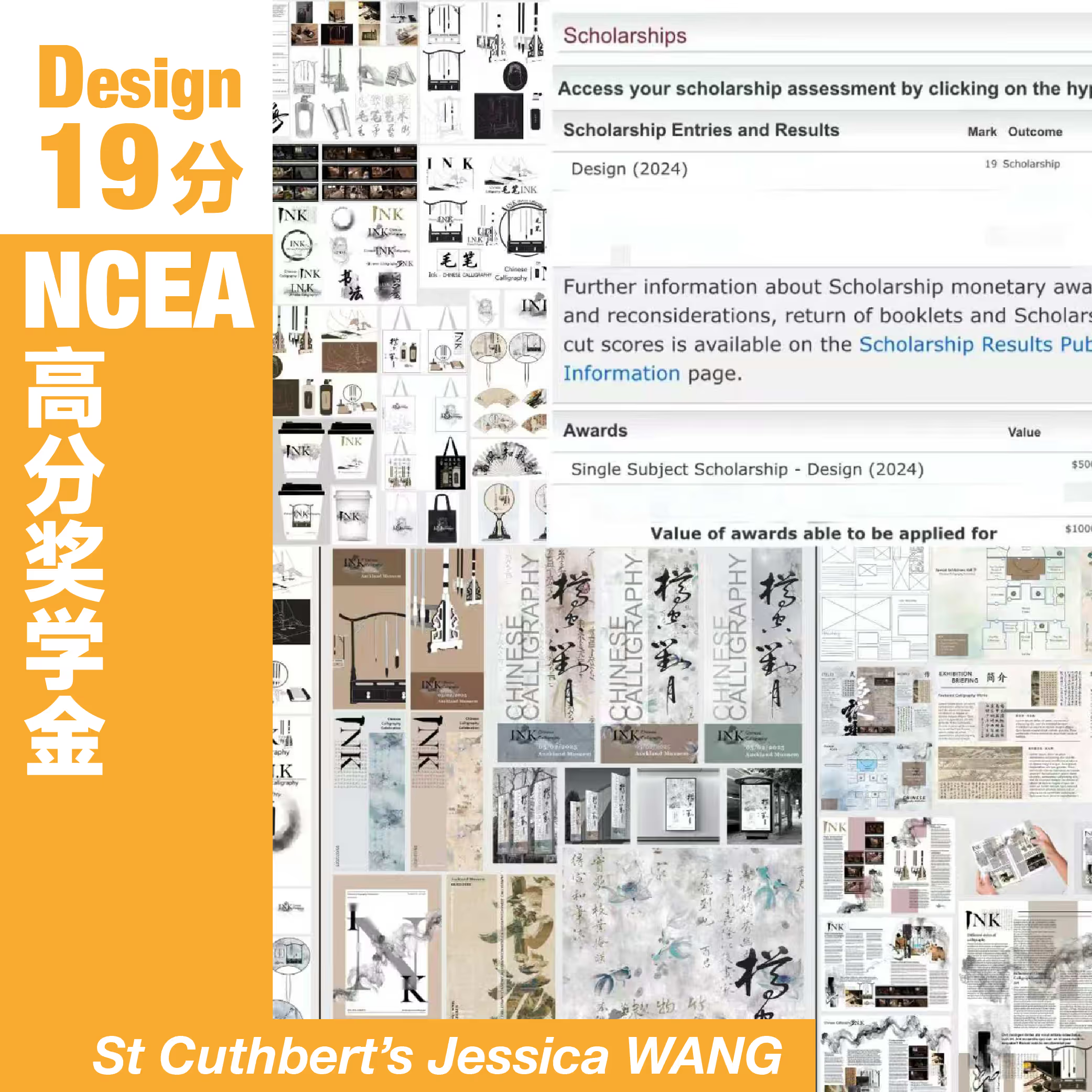
In New Zealand high schools, NCEA is the core academic qualification pathway before university. Within this system, art subjects stand out for their strong emphasis on process, development, and final outcomes. For students planning to apply for art, design, architecture, or related degrees, performance in NCEA Art often plays a far more significant role than many families initially expect.
Across Level 1, Level 2, and Level 3, students are required to complete a total of 80 credits at each level. While this requirement appears consistent on paper, the academic weight of those credits changes substantially as students progress. From Level 2 onwards, art subjects begin to carry greater significance in overall academic profiles, and at Level 3, art outcomes are closely aligned with university entry expectations. At this stage, the quality and coherence of a student’s work matters far more than simply meeting minimum credit numbers.
Unlike traditional exam-based subjects, NCEA Art is assessed through a series of staged evaluations rather than a single final test. Students are judged at multiple points throughout the year, and each stage contributes to the final outcome. This structure means that early decisions, development choices, and consistency over time have a direct impact on results. It also explains why many students invest significant effort yet remain at a basic achievement level — not due to lack of effort, but due to misalignment with assessment expectations.
In practice, large performance gaps often appear even among students studying the same art pathways, such as Visual Art, Painting, Design, or Photography. Some students perform well in Level 1 but struggle to maintain momentum in Level 2. Others only realise in Level 3 that their existing body of work is not strong enough to support competitive university applications. These differences are rarely about talent alone; they are more often the result of long-term planning, informed guidance, and a clear understanding of how development is evaluated over time.
This is why many families eventually seek specialised NCEA Art tutoring rather than relying solely on standard classroom instruction. At TsingMei Art Studio, the focus is on long-term outcomes — including high-level results and scholarship pathways — by helping students build structured, coherent, and progressive bodies of work at critical stages. For students who are serious about pursuing art or design at university, understanding the NCEA framework is only the starting point; knowing how to navigate it effectively is what ultimately creates distinction.